Catfood Earth for Android 1.40

Catfood Earth for Android now includes the option to display earthquakes (magnitude 5.0 or higher) from the USGS feed.

GetvCard.com was a contact exchange service I put together with a friend back before the Internet was popular. You could edit a business card online and then share it via a small link that would download a vCard file that would import your details magically. We even figured out how to hack the format to kind-of-sort-of work with Outlook of that era. I haven't had time to work on the site for ages and while it still has a few dedicated fans there aren't enough regular users to justify the maintenance. As of today it's no longer possible to create a new account. The plug will be pulled entirely at the end of the year.
When the site goes all existing contact information will be deleted, so if you need to save any details or redirect contact links please do so by the end of the year. If you need help leave a comment below.

Time lapse of Venus setting as seen from Bernal Heights in San Francisco.

Photo of a moth taken with a Lytro light field camera.

Catfood Earth for Android now includes the option to display earthquakes (magnitude 5.0 or higher) from the USGS feed.

Photo of downtown San Francisco under a lot of clouds taken from Alameda.

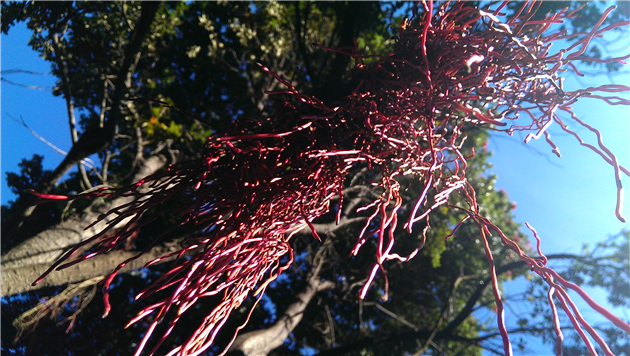
Playing with Lytro (light field camera). A tree in Bernal Heights Park, San Francisco.
4/5
Exactly what you'd expect from Reacher. It's a solid thriller and totally on form.
4/5
The fascinating, troubling and ultimately morally ambiguous story of how a ubiquitous and storied cell line (HeLa) came to be, and the impact this had on the family of Henrietta Lacks (whose cells became HeLa).
3/5
The central idea of the book - better to construct small experiments and learn faster - seems right, but for a book about validated learning there is precious little data to support the hypothesis. Do Lean Startups return more money to investors or do they just pivot between slightly different ways to share photos before entering the deadpool at the same rate as Fat Startups? I want to believe Lean is better but a stack of anecdotes about IMVU just isn't enough to convince me.
Also, I hate all business books that start out by explaining how their profound ideas are applicable to all people at all times in all industries before stretching out a paragraph of insight over hundreds of turgid pages.
Lastly always read business books a few years after the peak of their popularity so you get the benefit of hindsight and a chuckle at the companies that are held up as shining examples of the author's methodology at the time but are now dead, festering or mostly incarcerated.
Having said all that I think that the approach is generally right and I appreciate that at several points in the book Ries states that there are no easy answers and no substitute for good judgement.
4/5
Exactly what you'd expect from Reacher. It's a solid thriller and totally on form.
4/5
The fascinating, troubling and ultimately morally ambiguous story of how a ubiquitous and storied cell line (HeLa) came to be, and the impact this had on the family of Henrietta Lacks (whose cells became HeLa).
3/5
The central idea of the book - better to construct small experiments and learn faster - seems right, but for a book about validated learning there is precious little data to support the hypothesis. Do Lean Startups return more money to investors or do they just pivot between slightly different ways to share photos before entering the deadpool at the same rate as Fat Startups? I want to believe Lean is better but a stack of anecdotes about IMVU just isn't enough to convince me.
Also, I hate all business books that start out by explaining how their profound ideas are applicable to all people at all times in all industries before stretching out a paragraph of insight over hundreds of turgid pages.
Lastly always read business books a few years after the peak of their popularity so you get the benefit of hindsight and a chuckle at the companies that are held up as shining examples of the author's methodology at the time but are now dead, festering or mostly incarcerated.
Having said all that I think that the approach is generally right and I appreciate that at several points in the book Ries states that there are no easy answers and no substitute for good judgement.