Radio 4: Can I buy you a new hard drive?

By . Updated on

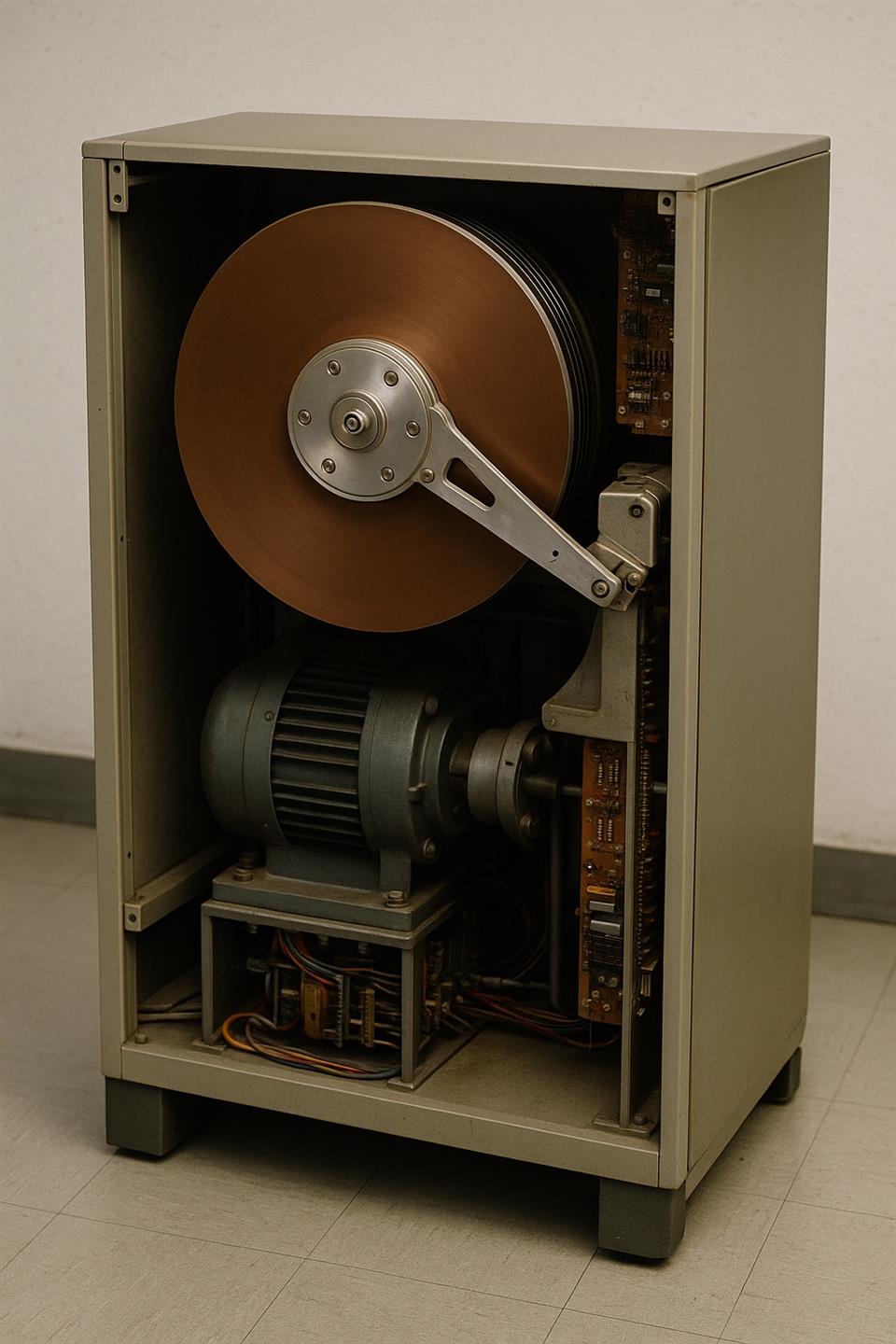
Actual Radio 4 Hard Drive

I love that Radio 4 is available outside the UK on iPlayer. It’s an essential link to home. But why, oh why, oh why is each program episode only available for a few days? It’s so frustrating to find an interesting looking series and then discover that it’s halfway through and you can’t listen to the first episodes.

BBC, I’d be happy to send you a new hard drive if that would help. It really can’t require that much space to keep the content around for more than a week.

While you’re at it: per-program RSS feeds and more podcasts please.

Is PAD dead?

By . Updated on

I’ve been a member of the Association of Software Professionals (née Shareware Professionals) for nearly ten years and I publish PAD files for most Catfood products. The idea is that PAD provides a standardized XML format for syndicating product information out to download sites. I used the ASPs PAD directory back in 2009 to analyze product information available in this format.

It used to be that download sites were a significant source of traffic and downloads, especially cnet’s Download.com. This just isn’t the case for me any more. I need to really massage Google Analytics to find any referral traffic from download sites. While I have PAD files available I no longer make any effort to promote them. Given a spare minute or two it’s far more effective to write a blog post.

Historically Download.com did a great job surfacing new products. They’ve shifted to emphasizing paid placements and the most popular so unless you’re a category killer (in a pre-defined category) it’s much harder to get traction. Lower tier download sites used to offer some SEO benefit but I really don’t see this any more as the sites have got wise to preserving their limited link juice.

Other than inbound marketing efforts my best source of traffic is creating Google Gadget versions of my products where appropriate. These provide independent value and link to the downloadable version for people who want more (a fusion of freemium and shareware).

Having got to the point of giving up on PAD I’m excited to see Ryan Smyth’s rallying cry in the introduction to a series on this topic on cynic.me:

“I’m going to once and for all shut up the many nay-sayers that are constantly poo-pooing on PAD, Robosoft, and download sites.”

Maybe I’m just doing it wrong. I hope so and I’ll be happy to learn something if this is the case.

GGNRA Draft Dog Management Plan

By . Updated on

The National Park Service has posted their draft dog management plan for the Golden Gate National Recreation Area. The plan is open for public comments until April 14, 2011.

For my comments and response see Response to GGNRA Draft Dog Management Plan on my main blog (I Thought He Came With You).

Boob Bombs

By . Updated on

Boob Bomb

The current pushback on the nasty choice between nude backscatter photos vs. ‘enhanced’ TSA groping got me thinking.

If I really wanted to blow up a plane (which I don’t) I wouldn’t mess around with printer cartridges or shoe bombs. I’d combine some explosive containing breast implants with a trigger disguised as a pacemaker. Some terrorist cell somewhere must be working on this or something like it.

How would the TSA respond? Would we need an MRI before boarding?

I think the radiation scare is overblown – far lower than the risk from hanging around at 30,000 feet. But it’s not ridiculous to refuse and getting to third base with the TSA doesn’t seem like it’s making us much safer.

Zombie Robs

By . Updated on

Zombie Rob

I (used to) use Facebook for people I know well, LinkedIn for weaker ties and Twitter mostly for people I don’t know at all.

Over time though I’ve created identities on pretty much every network. With the increased interconnectedness of such sites when I stop using them I don’t stop posting…

I just discovered (in a spam filter) that someone was having a one sided conversation with me on Plaxo Pulse. I’m also actively posting (but not paying attention) on Buzz and goodness know how many other networks. I’m sure this inflates their active user count admirably but I’m now worried that undead me is being rude.

The social graph needs to work better in the other direction. Everything I post and comment on syndicates out like crazy but keeping track of responses just isn’t working.

Think before you print?

By . Updated on

Illustration of wastefully printed emails

Don’t tell me to think before printing your email.

Firstly, it’s not that special. You’re lucky if I’m reading it at all. Do you really think I want a copy for posterity? Am I going to have it framed? Let’s face it, your target audience is pre-Internet execs who have their secretaries print their emails out so they can dictate a reply back later.

Secondly, do you think your sanctimonious footer comes at no cost? Using the power of randomly Googling facts each bit takes 4.6µJ and 2.8 million emails are sent every second. Assuming a 60 character nag if everyone indulged that’s over 12kW of smugness. For approximately no pages of paper saved.

And don’t get me started on lawyers. We could probably stop global warming if they’d just skip the fifteen page footer explaining how it’s somehow your fault if they send their emails to the wrong address.

AT&T MicroCell Woes

By . Updated on

AT&T's MicroCell extends their famously inept network into your home or office. It does a tragically good job — you can use your broadband connection to not make calls rather than not making calls through an AT&T tower.

It's actually worse, because at least on the actual network you know when your signal sucks. With the MicroCell my phone shows five bars but will often refuse to make or receive a call. The first clue is often leaving the coverage of the device and finding out what you've missed. In fact, I think it might even be illegal under the Communications Act of 1934 as it's effectively a jammer. 

Even if I can make a voice call the wretched thing screws up geolocation. In order to comply with E911 the device is registered to a specific address AND requires a GPS lock to function at all. Despite this it tells my phone that it's in Berkeley. Switch the MicroCell off and I instantly get the correct location in San Francisco. Switch it on and I'm teleported to Telegraph Avenue. My Google Latitude history has whiplash every time I leave the house. 

Reading the AT&T forums I'm lucky. Other users are located in the wrong state, and have choppy voice when they can make a call at all. 

Top 5 reasons to hate the Facebook like button

By . Updated on

5. Validation

The metadata required to use the like button looks like this:

[code:html]


[/code]

But the property attribute isn't valid html or xhtml. The “Open” Graph Protocol says that it's inspired by Dublin Core. DC manages to get by using the name attribute like any other meta tag - why can't Open Graph? It's not the worst problem but it just seems needlessly irksome. Facebook has published a presentation describing their design decisions. This would be great, but it's in that Lessig one word per slide style and so it's attractive but completely useless without the presenter.

4. Fragility

Facebook's documentation is frustratingly sparse. For example you need to specify the owner of the page using a Facebook ID, and once you've chosen a name for your profile this is hard to find. The information vacuum has been filled with many erroneous blog posts saying to use the name, or some number from a shared photo (the best source is https://graph.facebook.com/robert.ellison, substituting your own username). Once you've got the admin ID wrong, you can't correct it - the first admin specified is fixed forever. What happens if a site is hacked and a bad actor sets themselves up as the admin? Surely something like the Google Webmaster Tools authentication scheme could have been used instead?

3. Pages with more than one object

Describing the object being liked in the head element limits you to one object per page. For some sites this is perfect, but what about a blog where you have many posts on the home page? It would be useful to have a like button per post, pointing at the permalink for the post in question. I've worked around this by having a like button for the blog on the home page, and a like button for each post on the post pages. Not ideal. I'm using the iframe version of the gadget, possibly there's some more flexibility with the XBML variant.

2. Duplicating existing pages

Let's say you've spent the past couple of years building up a Facebook page for your site/band/blog/movie and have thousands of fans. When you click your new like button for the first time you create a whole new page. There's no way to tell the like button about the existing page or the existing page about the like button. You now have at least two pages to worry about managing and potentially many, many more. You're also starting from scratch on the ‘like’ count, so even if your brand is already popular on Facebook it's back to Billy no-mates for you.

I can't believe this won't be fixed at some point. As with admin authentication above there must be a better way to establish ownership of various objects in the social graph.

1. Vocabulary

Doctors defend genital nick for girls

For better or worse Facebook has the inexorable pull to start making the semantic web a reality. Given this, and that there are something like twenty-four thousand verbs in the English language it's time for more expressiveness than ‘like’. You also can't comment on the ‘liked’ item in your stream (yet) so no clarification or discussion is possible.

--

Having said all that, if you enjoyed this post please click the ‘like’ button above ;)

Reviews and links for April 2010

By . Updated on

The Spire by Richard North Patterson

3/5

A good enough holiday read and nice to see Patterson return to a straight psychological thriller rather than the last few OpEds loosely wrapped with some plot.


Advanced .NET Debugging (Addison-Wesley Microsoft Technology Series) by Mario Hewardt

5/5

Comprehensive introduction to low level .NET debugging - when you need to fire up WinDbg to check out the state of the managed heap, or debug a crash dump from the field you'll find this book invaluable. I wish it had been available when I started figuring out how to use SOS.


The Complete Stories of J. G. Ballard by J.G. Ballard

5/5

Wonderful collection of all of Ballard's short stories. It's a huge book with surprisingly few duds. My favorites include The Illuminated Man, clearly the inspiration for The Crystal World, which includes meaning bombs like "It's almost as if a sequence of displaced but identical images were being produced by refraction through a prism, but with the element of time replacing the role of light." and The Ultimate City (which isn't using ultimate in the sense of being good...). I've read most of Ballard's novels but not many of the short stories before. They're well worth the time.


Links

- Microsoft Agrees With Apple And Google: “The Future Of The Web Is HTML5″ from TechCrunch (Which makes it all the more tragic that a huge number of clients will still be running IE6 :().

- Comedian criticises BBC 'rebuke' from BBC News | News Front Page | World Edition (The problem isn't that it was anti-Semitic, it's that it wasn't funny.).

- UK 'has a high early death rate' from BBC News | News Front Page | World Edition (That'll be the deep fried mars bars and chips.).

- Oklahoma, where women's rights are swept away from All Salon (Competing with AZ to be the most fucked up state? Sigh :().

- Cameras capture 'Highland tiger' from BBC News | News Front Page | World Edition (Tabbs was bigger than that (a house cat)).

- MI5 dumps staff lacking IT skills from BBC News | News Front Page | World Edition (MI5 has staff without computer skills?).

- The Internet Provides. from jwz (Disturbing).

- Who Really Spends The Most On Their Military? from Information Is Beautiful (Click through to the Guardian blog post, interesting reading.).